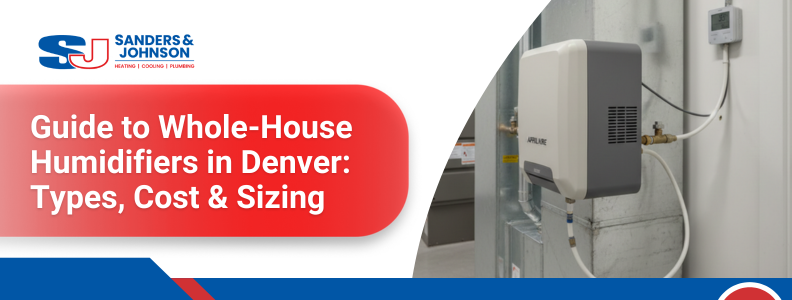

Guide to Whole-House Humidifiers in Denver: Types, Cost & Sizing
Living near the beautiful Front Range mountains in Denver means enjoying breathtaking views but also dealing with some of the driest air in the United States of America. Denver’s low humidity can damage your home comfort systems and health, causing everything from irritated skin and respiratory discomfort to cracked woodwork. Portable humidifiers are only a temporary solution for individual rooms. Sanders & Johnson installs whole-house humidifiers in Denver to provide comprehensive moisture control throughout the entire home.
Key Takeaways
- Low home humidity can lead to health issues, such as dry skin, and damage to wooden floorboards and furniture.
- Denver’s high elevation and semi-arid conditions make low humidity a normal concern in the area’s households.
- There are three different types of whole-home humidifiers: bypass, fan-powered, and steam.
- With Denver’s semi-arid climate and high elevation, which cause dry air, a whole-house humidifier is a practical investment for health and comfort.
Why Do Denver Homes Struggle With Dry Indoor Air?
The struggle with dry indoor air in Denver stems from multiple factors that create a perfect storm of low-humidity conditions. First, our mile-high altitude means the atmosphere naturally holds less moisture than lower elevations. Denver is also considered semi-arid, receiving only 8 to 15 inches of precipitation per year, much less than many regions in the country.
During winter, when heating systems run constantly, the low-humidity situation becomes even more noticeable. Furnaces and heating systems warm the air but don’t add moisture, causing the humidity levels to drop dramatically. Air conditioners also remove humidity from warmer air.
The consequences of extremely low indoor humidity extend beyond discomfort. People with respiratory conditions, such as asthma, may notice their symptoms worsening. Your home also suffers, with hardwood and wooden furniture cracking. If you have instruments, such as guitars or pianos, dry air is also harmful to their materials and can cause warping.
Low humidity also makes your home feel colder than it is, so you often turn up the thermostat and use more heating energy. Investing in a whole-home humidifier will remedy all of these factors and more.
Whole-House Humidifier Types for Colorado Homeowners
Here are three main types of whole-house humidifiers in Colorado that Sanders & Johnson specializes in: bypass, fan-powered, and steam. Let’s dive into the bypass humidifier vs. steam humidifier advantages and differences between each type.
Bypass humidifiers
Bypass humidifiers use heated furnace air to add moisture. They require minimal maintenance and are generally less expensive than other models. However, they may not be as effective in extremely dry climate situations. They’re ideal for smaller to medium-sized homes.
Fan-powered humidifiers
These systems operate independently of your HVAC system. Powered humidifiers use a built-in fan for more efficient and consistent humidity. They are better for various climates and larger homes. However, they can sometimes be more expensive to install than a simple bypass humidifier.
Steam humidifiers
These systems also work independently of your HVAC system, using electricity to boil water and push pure steam directly into your ductwork. They provide the most precise humidity control and can quickly add significant moisture, making them ideal for larger homes or those with high humidification needs. They have higher upfront costs and use more energy, but for Denver’s dry air, they are worth the investment and are the best humidifiers for Colorado.
How to Size a Whole-House Humidifier for a Denver Home
Properly sizing a whole-house humidifier is critical to achieving optimal humidity levels. One way Sanders & Johnson determine the proper sizing of a humidifier is through a Manual J Load Calculation. This important step uses your home’s square footage and other variables, such as air leakage, to determine the correct size. A well-insulated, tightly sealed (or “tighter”) newer home retains moisture better than an older home with air leaks and poor insulation.
Humidifiers for dry climates are rated by their output of gallons per day (GPD). A general guideline suggests that a 2,000-square-foot home requires approximately 12–15 GPD of humidification capacity with moderately tight sealing. However, if your home is older and has poor sealing, you may need 15–18 GPD per square foot.
Sanders & Johnson technicians will determine your home’s air sealing tightness and the correct size of the humidifier.
Whole-House Humidifier Cost in Denver
Understanding the investment required for whole-house humidification helps homeowners budget effectively and compare options. The costs vary based on the type of system, installation complexity, and your home’s specific requirements.
Bypass humidifier costs
Bypass humidifiers are the most affordable option, working well for many homes. Installation is relatively straightforward, typically taking 2–4 hours, though costs may increase if extensive ductwork modifications are required.
Fan-powered humidifier costs
Fan-powered models are slightly more expensive. They include their own fans and controls, making installation slightly more involved than for bypass systems. However, their improved efficiency and performance often justify the added cost.
Steam humidifier costs
Finally, steam-powered humidifiers are the premium option. These installations will incur the highest cost but give you the greatest comfort. These systems need a dedicated electrical circuit and more complex integration with your existing ductwork and control systems. Installation takes longer and requires greater expertise, but the result is superior humidity control and capacity.
Regardless of your decision, Sanders & Johnson is the perfect choice for installing your whole-home humidifier. We also offer excellent financing options to help with the upfront costs of a new whole-home humidifier.
Is a Whole-House Humidifier Worth It in Denver, CO?
With Denver’s semi-arid climate and high elevation, a whole-house humidifier is definitely worth it.
Maintaining appropriate humidity levels supports your respiratory system. Proper moisture levels also help keep your nasal passages and throat well hydrated, making it harder for viruses and bacteria to take hold. If anyone in your household has asthma, eczema, or chronic sinus issues, maintaining proper humidity can provide noticeable relief.
Then comes comfort and energy savings. Properly moisturized air feels warmer and more comfortable, allowing you to turn down the thermostat and reduce your heating bills. Whole-house units are also more efficient than running multiple portable humidifiers, which consume more energy and require frequent refilling and maintenance.
Have the Perfect Humidity in Denver with a Whole-Home Humidifier Installation
Denver’s challenging climate makes whole-house humidification a practical necessity for maintaining a healthy, comfortable home. At Sanders & Johnson, we bring nearly five decades of experience helping Denver homeowners select and install the perfect humidification solution. Contact us today to schedule a consultation and learn how whole-house humidification will transform your indoor environment.