
Here at Sanders & Johnson, we provide Mitsubishi mini-split installation in Denver, CO, for year-round comfort in your Mile High City home. If you’re looking to boost efficiency, improve indoor comfort, and enjoy reliable heating and cooling, our experts are here to help you choose and install the right system for your home.
Why Choose Mitsubishi Mini-Splits?
With over 100 years of expertise, Mitsubishi is considered one of the most trusted electrical and electronic equipment companies across the globe. Founded in 1921, the company began as a marine motor factory and has since evolved into a global leader in HVAC, factory automation, semiconductors, and automotive equipment.
Renowned for their top-quality technology and sustainable, efficiency-focused HVAC solutions, Mitsubishi has become one of the most recognized names in ductless heating and cooling. Their inverter-driven compressors ramp up and down instead of cycling on and off, creating less wear on the equipment, more even temperatures, and a quieter operation than traditional forced-air systems.
Each indoor unit has its own thermostat, so you also get true zoned comfort and enhanced energy efficiency. You won’t pay to condition rooms nobody’s using.

Mitsubishi Hyper-Heat Technology for Colorado Homes
Mitsubishi Hyper-Heating (H2i®) systems are designed to handle the extremes of Denver’s climate. These advanced cold-climate heat pumps provide full heating capacity down to 5°F and continue operating down to -12°F, making them a top choice for the area’s freezing winter weather.
Standard heat pumps lose heating capacity when temperatures drop, causing them to struggle during Front Range winters. H2i systems keep producing heat well below freezing, so your mini-split keeps working through the entire season. They also run in reverse to cool your home in the summer, providing year-round comfort.
Single-Zone vs. Multi-Zone Mitsubishi Systems
Mitsubishi single-zone mini-split systems are a leading choice for local homeowners looking to enhance the comfort of their home addition, retrofit, or converted space, like a garage or attic. These high-efficiency systems connect an outdoor condenser to an indoor unit to provide heating or air conditioning for a specific area. They’re best when you want to focus on one room, instead of conditioning the entire house.
Multi-zone mini-split systems offer a flexible, energy-efficient solution for whole-home comfort without ductwork. Mitsubishi electric mini-splits feature up to eight indoor air-handling units per outdoor heat pump, with the option to install multiple heat pumps per system, offering room-by-room temperature control and improved efficiency throughout your home. One outdoor unit can serve multiple rooms throughout your home, each with its own temperature setting.
If you’re unsure which type of system is best for your home, our Mitsubishi mini-split installers can walk you through your options and provide honest recommendations on the right fit.
Where Mitsubishi Mini-Splits Work Best
Mitsubishi’s ductless mini-splits work best in older Denver homes without existing ductwork, new additions, or converted spaces where ducts don’t reach. Some of the most common places homeowners install ductless systems include:
- Older homes without ductwork
- Historic homes
- Sunrooms
- Finished basements
- New additions
- Detached garages
- Bonus rooms
Benefits of Installing a Mitsubishi Mini-Split
With high altitude, winter lows of -9°F, and hot, dry summers, you need a heat pump that can keep up with Denver’s temperature swings. Mitsubishi mini-splits are the leading choice for Denver homeowners seeking superior cold-climate performance and exceptional energy efficiency. With zone control, whisper-quiet operation, and H2i® Hyper-Heat technology, these systems offer all the features you need to stay comfortable year-round in the Rocky Mountain climate.
Going ductless helps you avoid the losses that come with delivering air through ducts, and zoning means you only heat or cool the rooms you’re actually using. Multi-stage filtration in the indoor units also helps capture the dust and pollen from dry Front Range summers, so you have better indoor air quality, more consistent comfort, and ductless heating and cooling in a single system.
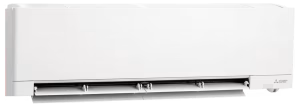 What To Expect During Mitsubishi Mini-Split Installation
Our skilled technicians follow a step-by-step Mitsubishi mini-split installation process that sets your home up to handle Denver’s harsh winters and high-altitude temperature swings. We begin with a thorough evaluation, where we’ll assess your home layout, insulation, and window exposure to run a load calculation that determines the right system size for each space. Next, we’ll carefully explain your options and help you select the right single-zone, multi-zone, or hyper-heating system to keep your home at the right temperature year-round.
Once you’ve selected a system, we’ll install your indoor units in a placement that suits each room, whether that’s wall-mount, ceiling-cassette, or floor-mount to deliver even airflow throughout your home. Most single-zone installations take one day, while multi-zone installations can take two to three days depending on the number of indoor units.
Before leaving, we’ll test the entire Mitsubishi ductless heating and cooling system to confirm everything is working properly. Your technician will then perform a walkthrough of your new system, explaining how to run each zone, set schedules, and rinse the filters.
Why Choose Sanders & Johnson?
At Sanders & Johnson, we’re the leading experts in Mitsubishi heat pumps throughout the Denver area. With 49 years of experience serving Colorado homes, we have extensive knowledge in Mitsubishi mini-split service and the unique demands of Denver’s climate. We also offer Mitsubishi mini-split repairs and routine maintenance services to keep your system running at its best.
If you’re looking to upgrade and experience the benefits of a Mitsubishi HVAC system, we’re here to walk you through the entire process. Our NATE-certified, background-checked technicians perform thorough evaluations, offer clear, honest recommendations, and provide expert installations that have your comfort in mind. We’ll never upsell you on a system you don’t need or pressure you into unnecessary add-ons or services. We’re simply here to help you get the best solution for your home.
Schedule Your Mitsubishi Mini-Split Consultation
With expert guidance and personalized recommendations, our team can help you explore your options and find the best solution to keep your space comfortable in Denver’s climate. Schedule with us today to discover if a Mitsubishi ductless mini-split is right for your home.
Frequently Asked Questions
How long do Mitsubishi mini-splits last?
Most Mitsubishi mini-splits last between 15 and 20 years. Scheduling annual professional maintenance helps extend the lifespan of your unit and keep your manufacturer’s warranty valid.
Are Mitsubishi mini-splits expensive to operate?
Mini-splits are comparable to a conventional AC and furnace when it comes to operating costs. In homes without ductwork, they can even reduce costs by only conditioning the space you’re actually using.
Can they replace a furnace?
Mini-splits often can’t replace a furnace in Denver’s climate. Most homeowners here pair their mini-splits with existing furnaces or boilers to cover the coldest days of winter.
Do mini-splits qualify for rebates in Colorado?
Yes. With Xcel’s heat-pump rebate for Colorado homeowners, you can receive up to $2,250 per ton on your installation of a cold-climate heat pump. Our experts are here to guide you through the rebate process and set you up with financing or special offers to help you maximize your investment.
How often should they be serviced?
Mini-splits should be professionally serviced at least once a year. Routine tune-ups cover coil checks, refrigerant testing, electrical checks, and performance testing that help your system run reliably through the seasons.
Do mini-splits increase home value?
Installing an energy-efficient mini-split can increase your home value when upgrading from an aging HVAC system. In basements, garages, and additions, they’re also seen as a selling point by buyers who want added comfort in those spaces.