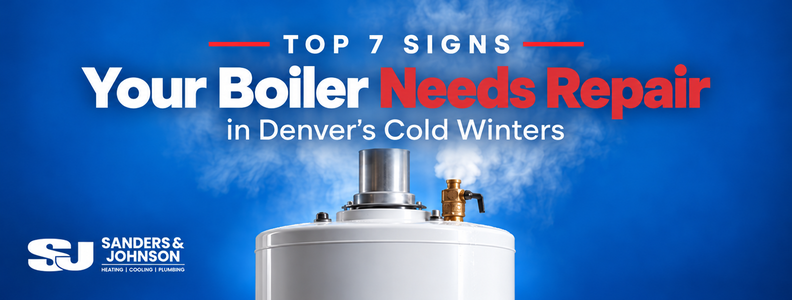

Top 7 Signs Your Boiler Needs Repair in Denver’s Cold Winters
When your boiler needs repair, you’ll often notice strange smells or noises, leaks, or uneven temperatures around your house. Most systems give you at least one of these warning signs before they stop working, so you have time to schedule a boiler repair before the heat goes out completely. In this guide, we’ll walk you through what to watch for so you can catch the problem early and keep minor problems from turning into a breakdown in the middle of Denver’s winter.
Quick Answers
- Common signs your boiler needs repair include leaks, cold radiators, a yellow flame, short cycling, strange noises, and pressure outside the normal range.
- Denver’s long heating season, temperature swings, and high altitude all add extra strain to your boiler.
- If your boiler stops on a freezing night, check the thermostat and breaker first, then protect your pipes while you wait for repair.
- Sanders & Johnson offers same-day boiler repair in Denver with no after-hours fees.
7 Signs Your Boiler Needs Repair
The following seven signs your boiler needs repair are the issues we see most often in Denver homes.
1. Gas or burning smell
A gas smell near your boiler is an emergency, and your first call should be 911. Natural gas has an added odor that smells like rotten eggs or sulfur. If you notice it, immediately leave the house and call emergency services once you’re outside. Wait for emergency responders or your gas company to clear the home, then call a technician for repair when it’s safe.
Burning smells are less urgent and are often linked to dust or an electrical issue. A faint dusty smell when you first turn on your heater each fall is usually dust burning off the radiators and should fade within a day. A burning smell that lingers or smells like hot plastic can be from an electrical problem that needs a technician.
2. Leaking boiler
A leaking boiler often has a worn pressure relief valve or failing pump seal that lets water escape from the system. Water around your boiler can damage flooring and drywall, so it’s important to fix leaks quickly to prevent damage. If you see water leaking from your unit or the pipes around it, turn it off and call a technician to find the source.
3. Uneven heat or cold radiators
Uneven heat or cold radiators are a sign that hot water isn’t moving through your system the way it should. Trapped air is the most common cause, especially in upstairs radiators. Bleeding the radiators can help, but if the rooms stay cold after, the circulator pump or a zone valve may be the problem.
4. Yellow or flickering flame
A yellow or flickering flame means your boiler isn’t burning gas properly. A healthy flame is steady and blue. When it turns yellow or orange, it can be a sign of dirty burners or a combustion problem, which can lead to a carbon monoxide leak. If your CO alarm goes off, leave the house and call 911.
5. Short cycling
Short cycling often results from an oversized boiler or a thermostat problem. If your boiler turns on and off every few minutes without completing a full heating cycle, something is keeping it from running properly. Constant on-and-off cycling wastes gas and wears out parts like the ignitor faster, leading to more frequent repairs and earlier replacement.
6. Boiler making strange sounds or noises
A boiler making strange sounds or noises is a signal that something inside the unit needs attention. Common noises Denver homeowners hear include:
- Banging or rumbling, which points to buildup or overheating in the heat exchanger.
- Gurgling from air trapped inside the lines.
- Whistling from low water flow through the system.
- Repeated clicking without the burner lighting, which signals an ignition problem.
7. Pressure outside the normal range
Boiler pressure outside the normal range indicates the water pressure in your system is either too high or too low. Most residential hot water boilers sit at 12 to 15 psi when cold and can rise to around 25 psi when hot. Low pressure can mean there’s a leak somewhere in the system, while high pressure can mean the system is overfilled or the pressure relief valve is faulty.
How Denver Winters Affect Your Boiler Performance
Denver winters force your boiler to work long hours that can affect its performance. Long heating seasons and sudden temperature swings cause your system to run for months at a time with little rest. The swings also put added stress on parts like the ignitors and pumps, which can wear them out sooner.
The altitude also plays a role in how well your boiler runs. Thinner air at 5,280 feet changes how gas burns and lowers your boiler’s heat output. Boilers in Denver need to be adjusted for the local elevation and checked during annual maintenance to make sure they’re burning safely.
What to Do If Your Boiler Stops on a Freezing Night
If your boiler stops working on a freezing night, there are a few simple checks you can do to rule out an easy fix:
- Check that the thermostat is set to heat and turned above the current room temperature.
- Confirm the boiler’s power switch is on and the breaker hasn’t tripped.
- Read the pressure gauge and make sure it’s within the normal range.
- Press the reset button once and call for repair if the boiler shuts down again.
If these troubleshooting steps don’t get your heat back on, call a professional for boiler system repair. While you wait for your technician, open cabinet doors under sinks and let a faucet drip to keep water moving and protect your pipes from freezing.
Call Sanders & Johnson for Boiler Repair in Denver
When your boiler stops working in the middle of winter, we’re ready to help with same-day boiler repair. We’ve served Denver homes for 49 years, and boilers are one of our specialties. Our boiler experts can track down the root cause and explain it in plain language before recommending the right fix.
If your boiler is showing any of the above warning signs, call us today to schedule boiler service and repair. We service all major makes and models, including Weil-McLein, Burnham boilers, Laars systems, and Lochinvar boilers.
Frequently Asked Questions
How much does boiler repair cost in Denver?
Boiler repair costs in Denver depend on what’s causing the problem and which parts need to be replaced. We provide an honest estimate before work begins and never charge after-hours fees or surprise add-ons.
Can I repair a boiler myself?
You can handle a few basic checks yourself, but most boiler repairs require a qualified technician. Repairs that involve gas, burners, or combustion can put your safety at risk, and a mistake can lead to a gas or carbon monoxide leak.
How often should I service my boiler?
You should have your boiler serviced once a year, ideally in early fall. Annual maintenance helps catch small problems and keeps your manufacturer’s warranty valid.