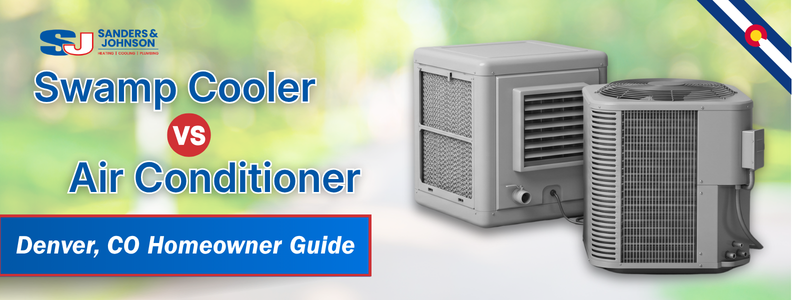

Swamp Cooler vs AC: Denver, CO Homeowner Guide
Homeowners across Denver often find themselves weighing whether a swamp cooler vs AC unit is the better choice for staying comfortable during the hot summer months. While swamp coolers offer better energy efficiency and added moisture in the dry mountain climate, air conditioners provide more consistent cooling and better performance when humidity levels rise.
Below, we’ll walk you through the installation differences, maintenance requirements, costs, and benefits of central air vs evaporative coolers to help you find the right fit for your Colorado home.
Difference Between a Swamp Cooler and an Air Conditioner
While swamp coolers and air conditioners both keep your home cool when Denver temperatures start to heat up, they differ in how they operate, their efficiency, and overall performance.
How Do Swamp Coolers Work?
Swamp coolers lower the temperature in your home using a fan to pull hot, dry outdoor air through water-saturated cooling pads. A small water pump, typically made from aspen wood or fiberglass, keeps the pads continuously wet, allowing the water to evaporate as the air passes through. This evaporative process naturally cools the air before it’s circulated throughout your home, keeping cool, fresh air flowing indoors.
Because swamp coolers rely on evaporation, they often become less effective when a summer monsoon increases humidity levels in Denver. Keeping your windows open for airflow can also become a drawback during wildfire smoke season or periods of poor outdoor air quality. Explore swamp cooler pros and cons below to see if they’re right for your home.
Pros
- Improved energy efficiency and lower utility costs.
- Fresh, outdoor air continuously circulates into your home.
- More budget-friendly installation and operation than central ACs.
- Eco-friendly cooling without the need for refrigerant.
Cons
- Less effective in humid climates and can make your home feel sticky.
- Require more frequent maintenance.
- Consume up to 15 gallons of water daily.
- Can increase indoor moisture levels.
How Do Traditional Air Conditioners Work?
Traditional air conditioners cool your home by extracting heat and moisture from indoor air and transferring it outside. They use refrigerant in a continuous, closed-loop cycle, where it absorbs, transports, and releases heat to lower indoor temperatures.
The cooling process begins when warm indoor air is blown across the evaporator coils, where liquid refrigerant absorbs the heat and turns into a gas. Chilled air is then circulated back throughout your home, while the refrigerant travels outside to the compressor, where it’s pressurized and heated. From there, the hot, gaseous refrigerant moves into the condenser coil, where outdoor air releases the trapped heat, condenses the refrigerant back into a liquid, and prepares it to repeat the cycle.
Pros
- Offers consistent cooling in all climates.
- Helps lower indoor humidity to prevent mold and mildew growth.
- Filters out airborne contaminants like dust, pollen, and pet dander.
Cons
- Older, less efficient models can significantly increase energy usage.
- Constant operation can dry out indoor air and cause dryness or irritation.
- Older refrigerants and high energy consumption can increase your carbon footprint.
- Outdoor units and compressors can be noisy to run.
Why Swamp Coolers Work Well in Colorado
Colorado’s high-altitude climate and low humidity make swamp coolers a popular option for Denver homeowners. The dry air allows water to evaporate quickly, helping swamp coolers lower indoor temperatures while adding moisture back into the mountain air.
Because Denver summers are often hot but not overly humid, swamp coolers offer the benefit of consistent cooling for most of the season, while using less energy than traditional ACs. They also keep fresh outdoor air circulating throughout your home on warm, dry afternoons, offering better ventilation and fresher indoor air quality.
Which Cooling System Is Best for Your Denver Home?
Swamp coolers offer lower energy costs and added moisture in Colorado’s dry climate, while central air conditioners keep temperatures consistently cool year-round and provide better humidity control. Understanding the difference between a swamp cooler and an air conditioner can help you make the right choice for your home.
Choose a swamp cooler if:
- You want to cut energy usage and utility costs.
- You prefer fresh, humidified air circulating around your home.
- You don’t already have central ductwork.
- You mostly use your cooling system during Denver’s driest months.
Choose AC if:
- You need reliable cooling during monsoon and wildfire season.
- You’re sensitive to humidity or allergens.
- You want precise temperature control and better filtration.
- You prefer to keep your home cool without having to keep your windows open.
Installation and Maintenance Considerations
Swamp coolers and air conditioners come with different installation requirements and maintenance needs. Swamp coolers are more cost-effective to install and are often mounted on the roof or window. Traditional air conditioner installation is a higher upfront investment and includes both indoor and outdoor components connected through refrigerant lines and ductwork.
Both systems also differ in their maintenance requirements. Because swamp coolers rely on water and constant airflow, they require spring start-ups and winterization to prevent freezing, mineral buildup, and excess wear. Homeowners also need to perform monthly water tray checks and occasional cooling pad replacements to maintain proper airflow.
ACs require less maintenance, often only requiring annual professional tune-ups. During these visits, a technician performs thorough cleaning, inspection, and servicing to keep the system running efficiently and prevent hidden issues from progressing.
Operating Cost Considerations
Swamp coolers offer significantly lower operating costs compared to traditional AC systems. Because they rely on evaporation instead of refrigerants and compressors, they use significantly less electricity than central AC systems and can help lower your monthly utility bills. However, while air conditioners cost more to operate, they provide more consistent temperature control regardless of outdoor humidity levels or air quality concerns.
Discover Which System Is Right for Your Denver Home
Trying to decide whether a swamp cooler or an air conditioner is right for your Denver home? Contact Sanders & Johnson today to schedule an installation consultation and find the best solution. We’ll perform a thorough assessment of your square footage, layout, and cooling needs, walk you through your options, and recommend the best system for your home and budget. We also offer cooling repairs and maintenance for year-round peace of mind.
Frequently Asked Questions
Is a swamp cooler better than an AC unit in Denver?
Swamp coolers can offer better efficiency and lower operating costs than air conditioners during Denver’s driest summer days. However, they can struggle when humidity levels rise during monsoon season or when wildfire smoke forces homeowners to keep their windows shut.
Can you have both an air conditioner and a swamp cooler?
Many Colorado homeowners install both an air conditioner and swamp cooler to balance efficiency and cooling reliability. Having a dual system setup keeps your home comfortable during dry heat while still offering cooling when humidity or smoke moves in.
Should I replace my swamp cooler with central air?
If you’re struggling with uneven temperatures or high humidity levels, replacing your swamp cooler with a central air system can be a better long-term solution. Contact our team to learn more about your cooling options and explore whether a dual-system setup or replacement is best for your home.