
Does Your HVAC Make the Air Too Dry?
Dry air in the house may not sound like the end of the world, but it can really have a big impact on your comfort over time. With our high elevation and central location within the United States, Colorado has a unique climate. We enjoy cool and refreshing weather, but the air is quite dry, leading to everything from sore throats to cracked woodwork. By understanding a home’s HVAC systems and how they can cause dry air in your house, you’ll be better equipped to create a comfortable indoor environment.
Key Takeaways
- Furnaces can dry the air in your home, leading to health and comfort issues.
- Optimal indoor humidity is between 30% and 50%.
- Whole-home humidifiers are the best way to improve comfort in Colorado’s arid climate.
What Does ‘Dry Air in Your House’ Actually Mean?
Before we can dive into dry air symptoms, let’s explain what we mean by dry air in the home. The ideal relative humidity (RH) indoors is between 30% and 50%. If your RH is less than 30%, you may experience dry skin, respiratory irritation, and excessive static electricity.
Of course, you don’t want overly humid air in the home either. If your indoor RH is above 60%, you run the risk of excessive dust mites, structural damage, and hazardous mold growth in the home. Striking a balance in the ‘sweet spot’ of indoor humidity is the key to a safe, comfortable space.
How Your Furnace Affects Humidity Level
Does your furnace dry the air? The short answer is, yes. Furnaces are great for keeping our homes warm, but they also affect humidity levels. Your furnace heats up cold air, which increases the amount of moisture the air can hold without actually adding any moisture itself, leading to a dry-feeling space.
While this cycle keeps your rooms nice and warm, decreased humidity can cause discomfort. This can be more noticeable if your house already has dry air, especially in areas like Colorado, where the climate is more arid.
Does Your Air Conditioner Dry Out the Air?
While air conditioners remove some moisture from the air as they run, the idea that they dry out your home’s air to an uncomfortable level is mostly a misconception. It’s very rare for an air conditioner to drop your home’s relative humidity to less than 35%, which means you generally don’t need to worry about low humidity when running an AC.
Signs of Dry Air in Your Home
Throughout the year, dry air can cause a range of issues that impact both your health and the comfort of your home. It’s important to keep an eye out for signs that the air in your home is too dry in order to find the right solution.

Health and well-being
If you notice frequent coughing, sore throats, or nasal congestion while indoors, it could be due to the dry air. For those with asthma or allergies, this can aggravate symptoms and increase the risk of respiratory infections.
If you notice your skin feeling dry, itchy, or tight, it’s a sign that your home’s humidity levels are too low. A dry environment can also weaken your body’s defenses, making you more susceptible to illnesses and viruses. Believe it or not, dry air can even steal your body’s natural temperature control by making sweat evaporate quickly, leaving you feeling less comfortable indoors.
Comfort and sleep
Another sign of dry air in your house is the build-up of static electricity. If you experience frequent static shocks when touching objects or people, it may be an indication that the air in your home lacks moisture.
When a furnace causes dry air, it can also make it harder to sleep comfortably. If you find yourself waking up with a dry throat or experiencing increased snoring, your heating system may be to blame.
Damage to your home
If you suspect dry air in your home, check your walls and furniture for cracks or peeling paint. These issues can be caused by low humidity levels.
Lastly, listen closely for creaking floors or see if you notice gaps in your wooden furniture. Dry air can cause wood to shrink or warp. Fixing the dry air in your house can help prevent damage to your walls, furniture, and floor.
How to Fix Dry Air in Your House
Keeping the air in your home at the right humidity level can help your space feel more comfortable and contribute to a healthier environment for you and your family. Here’s how to fix dry air in the house:
Quick/DIY fixes
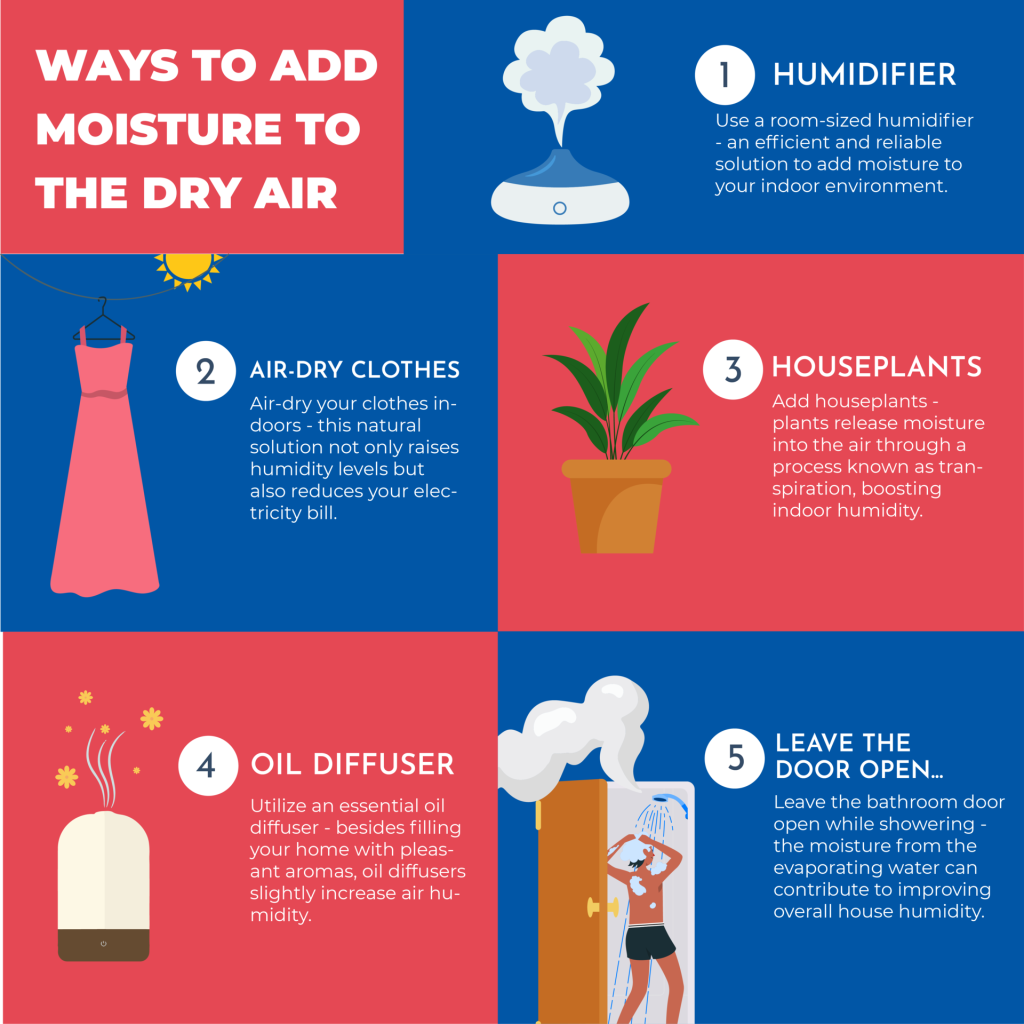
One easy way to fix dry air in a room is to use a room-sized humidifier. Even small humidifiers solve many air quality problems that can affect your comfort. You can also air-dry clothes indoors, add houseplants, use an essential oil diffuser, or simply leave the bathroom door open while you shower for a humidity boost.
HVAC solutions
While a furnace will always have some impact on the humidity levels in your home, there are other ways you can help avoid excessively dry air.
Firstly, make sure your equipment is well-maintained. By cleaning and replacing air filters on a regular basis, you’ll help to increase airflow and circulation. If your system is old and reaching the end of its lifespan, you may want to look into a replacement.
Whole-home humidifier installation
Whole-home humidifiers, such as the models from Aprilaire, are another way to help balance the moisture in the air. These systems use fans or steam to circulate moisture and remedy the negative effects caused by dry air in your house. An HVAC pro can help you choose the best whole-home humidifier for your needs.
When to Call an HVAC Pro for Dry Air in Your Home
If your home’s humidity level is causing you discomfort, health issues, or home damage, it’s time to get help from an HVAC professional. Our team will measure the humidity of the home, inspect HVAC systems, and recommend air quality solutions to ensure your home is safe and comfortable, whether the furnace is running or not.
Solving for Dry Air in Your House
Whether you’re experiencing a sore throat from your furnace or are simply uncomfortable because of excessively dry air in your house, knowing the right remedies can help you enjoy the cool air and still stay comfortable.
If you’re interested in learning more about fixing dry air in your house, contact the experts at Sanders & Johnson!
Frequently Asked Questions
What is the ideal humidity level for a home in Colorado?
For optimal comfort, we recommend an indoor humidity level of 35% to 50% in Colorado. This helps you avoid the issues of both dry and overly humid air inside the home.
Is a whole-home humidifier worth it in Denver?
Denver is known for its arid mountain climate, causing dry air in many homes. For this reason, a whole-home humidifier can be a great investment in your comfort and safety.
What is the best way to fix dry air in the house?
Poor furnace installation or cracked ductwork can result in insufficient moisture control. If your furnace system is properly installed and functioning correctly, consider looking into whole-home humidifiers to evenly maintain the moisture in your air.
Should I run my humidifier when the AC is on?
No, you shouldn’t run a humidifier while an AC is on. Since air conditioners remove some moisture by design, running a humidifier will force it to fight against the air conditioning, leading to little to no change and higher energy bills.