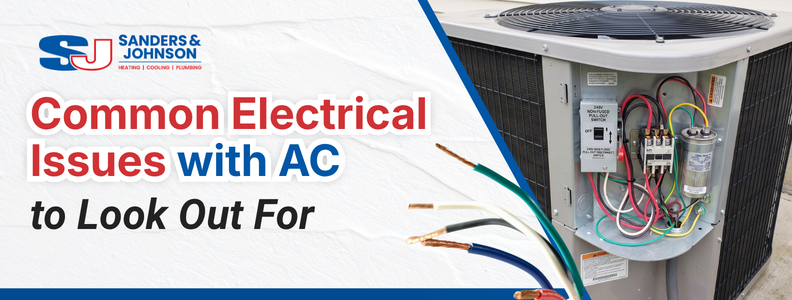

Common Electrical Issues with AC to Look Out For
(Last updated: November 6, 2026)
Summer in the Denver metro area can turn any home into an oven. If you’ve noticed air conditioner wires exposed near your outdoor unit, or your system is behaving strangely when it kicks on, you must find out what’s going on before a small issue turns into a costly repair. Having problems with damaged AC unit wiring can be hazardous.
At Sanders & Johnson, we’ve spent over 40 years working on AC systems across the Front Range. Below, we’ll walk through the most common electrical issues with AC systems, what causes them, and when it is time to have it repaired by a professional.
Key Takeaways
- Exposed or damaged wiring near your outdoor unit is a shock and fire risk that should never be ignored.
- A breaker that keeps tripping is often your electrical system’s way of warning you about a bigger issue.
- Denver’s hail, freeze-thaw cycles, and elevation all place extra stress on AC unit wiring.
- Same-day service from Sanders & Johnson is available when electrical issues need attention right away.
Exposed or Damaged Wires Around Your AC Unit
Air conditioner wires exposed to the elements are a serious issue. When insulation cracks, frays, or splits open, the bare conductor underneath is left vulnerable to a short circuit or electrical fire. It can also create the need for an expensive repair. Do not try to do the work on your own.
What causes exposed wiring
Rodents and squirrels chew through wire jackets looking for nesting material. UV exposure over years of Colorado sunshine gradually breaks down wire insulation, especially on older AC unit wiring or materials that have deteriorated over time. Colorado hailstorms and temperature swings do serious damage here as well.
Why matters for safety
A live wire with damaged insulation might sit quietly for months before a wet spring storm creates the right conditions for a short, tripped breaker, or worse. If you spot any wiring outside your unit that looks cracked, discolored, or chewed, schedule AC repair before you run the system again.
Circuit Breaker Keeps Tripping When the AC Runs
A circuit breaker that trips every time your AC starts up is telling you something is drawing more current than it should. If the breaker trips, do not keep switching it back on because this can cause more damage to the unit.
Common causes of a constantly-tripped breaker include:
- There might be a problem with the wiring inside the unit.
- There could be a dirty air filter or blocked airways.
- A failing compressor or capacitor makes the motor pull a surge of current on startup that the circuit can’t handle.
- The breaker is undersized for the current AC equipment.
Our technicians can pinpoint the underlying cause with load testing and a visual inspection of the wiring and components.
AC Capacitor Problems
A capacitor stores and quickly releases electrical energy that helps your compressor and fan motors start and run efficiently. When it weakens, the whole unit struggles to keep up.
Failing capacitors can announce themselves a few different ways:
- A persistent humming sound from the outdoor unit without the fan actually spinning.
- Hard starting, where the AC hesitates or struggles noticeably before the compressor engages.
- Short-cycling, where the system turns on and off in rapid bursts.
Loose or Corroded Electrical Connections
Loose or corroded connections are one of the sneakier electrical issues with AC systems. Outdoor condenser units vibrate constantly during operation. Over years, that vibration slowly works screws and wire connectors loose.
Moisture intrusion from rain, humidity, or condensation can contribute to corrosion inside electrical compartments. A loose or corroded connection means less surface contact, which means more resistance, and resistance generates heat. Left unaddressed, that heat buildup can damage insulation, melt connectors, or in rare cases, even spark a fire.
Worn or Faulty Contactor
The contactor is the switch that allows electricity to flow to your compressor and outdoor fan motor every time the thermostat calls for cooling. Like anything with moving parts, it eventually wears out.
Signs of a failing contactor include a chattering or buzzing noise when the AC cycles on, pitted or burnt contact points, and a fan that runs while the compressor stays silent. Once the contacts degrade far enough, the AC may not start at all.
Thermostat Wiring Issues
Thermostat wiring problems are often mistaken for a bigger AC failure when the fix is actually much simpler. Thermostats that have not been properly maintained, a wrong connection after a DIY swap, or corrosion inside the wall plate can all cause your system to ignore commands, run continuously, or fail to start altogether.
If your thermostat display is blank, unresponsive, or doesn’t match what your AC is actually doing, our thermostat services team can trace the wiring and confirm whether the issue is at the thermostat or further down the lines.
Why Denver’s Climate Is Especially Hard on AC Wiring
Denver’s climate creates electrical stress on AC systems that most of the country simply doesn’t deal with. Three local factors stand out.
Hailstorms
Colorado sees some of the most frequent and severe hailstorms in the country, and large hail can damage exposed conduit, disconnect boxes, or exterior wiring. It may also damage AC unit wiring insulation if protective coverings are compromised.
Freeze-thaw cycles
Our freeze-thaw cycles add a second layer of stress. Denver’s temperature can swing by 40 degrees or more within a single day, and repeated temperature cycling contributes to aging and deterioration of wire insulation over time.
High elevation
Denver’s elevation plays a quieter but persistent role. Thinner air at 5,280 feet reduces heat transfer efficiency, making outdoor condensers slightly less effective at rejecting heat. While modern equipment is designed to operate at altitude, these conditions can contribute to additional wear over many years.
When to Call a Professional for AC Electrical Issues
Any time you see exposed air conditioner wiring, smell a burning odor near your unit, or notice a breaker that won’t stop tripping, it’s time to call in a professional. Electrical work inside an AC system carries real risk, and a misdiagnosed issue can turn into a much larger repair.
Regular maintenance plays a vital role in catching these problems early. Our AC maintenance visits are aimed at catching loose connections or worn capacitors before they leave you without cooling on the hottest day of the year. Many manufacturers recommend annual professional maintenance.
If your current system is starting to show its age electrically as well as mechanically, it may be worth exploring new AC installation options rather than continuing to chase repairs. Newer Energy Star air conditioner models often include updated electrical components, improved controls, and more reliable contactors and capacitors while offering higher efficiency.
Not sure where to start? Our experienced HVAC technicians will help you decide on the best air conditioner for your home based on your budget and needs.
Don’t Wait Until Your AC Leaves You in the Heat
Electrical issues with your AC rarely get better on their own. Sanders & Johnson has been a family-owned name in the Denver area for over 40 years. We offer same-day service for repairs, honest estimates with no pressure, and flexible financing if a replacement turns out to be the better long-term option.
If your air conditioner is giving you trouble, schedule a service call from the heating and cooling experts at Sanders & Johnson today.